What is Brand Identity and Do I Really Need It?
If you asked a hundred brand designers what brand identity means, you’d end up with a hundred different answers. There is no one universal definition for it.
Brand identity has almost become a buzzword nowadays. But as with most such words, the lines have become blurred. Many people often confuse it with visual identity. If you’re still wondering what it means or if it applies to your business, this post is a must-read.
I have tried my best to sum up all you need to know about brand identity so you can decide if it is the right call for your brand. Here is a quick overview of what I cover in this article:
Table of Contents
What is brand identity?
Brand identity refers to the unique collection of assets that a brand uses to shape how its target audience perceives it. It clearly defines how your brand should look, sound, and feel to people outside your business.
Essentially, the aim of creating a brand identity is to give a business human-like characteristics. Why? To make your business more relatable and relevant to your ideal customer.
Difference between branding vs brand identity vs brand image
Branding is the process of creating a unique brand to distinguish an individual, company, or product/service from its competitors.
Brand identity is how a brand uses distinct visual and verbal assets to communicate and position itself in the minds of its target audience. Visual identity is part of brand identity.
Brand image refers to how the public actually perceives the brand, as a result of their experiences and attitudes.
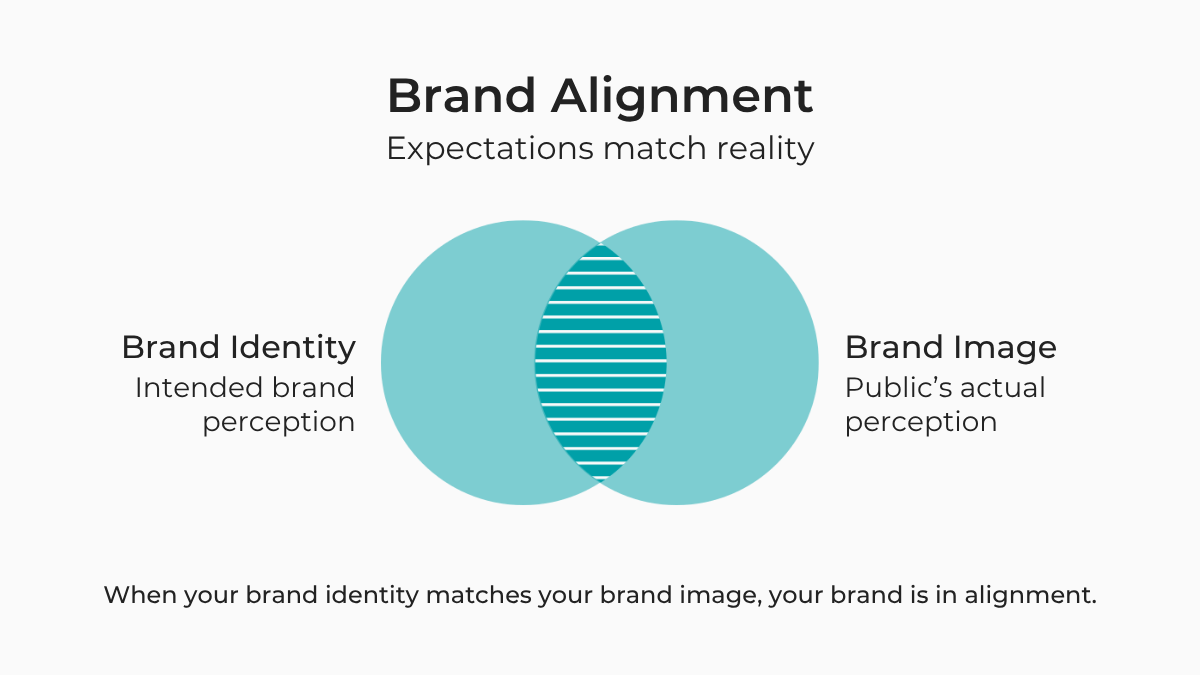
In other words, brand identity is the expectation, and brand image is the reality.
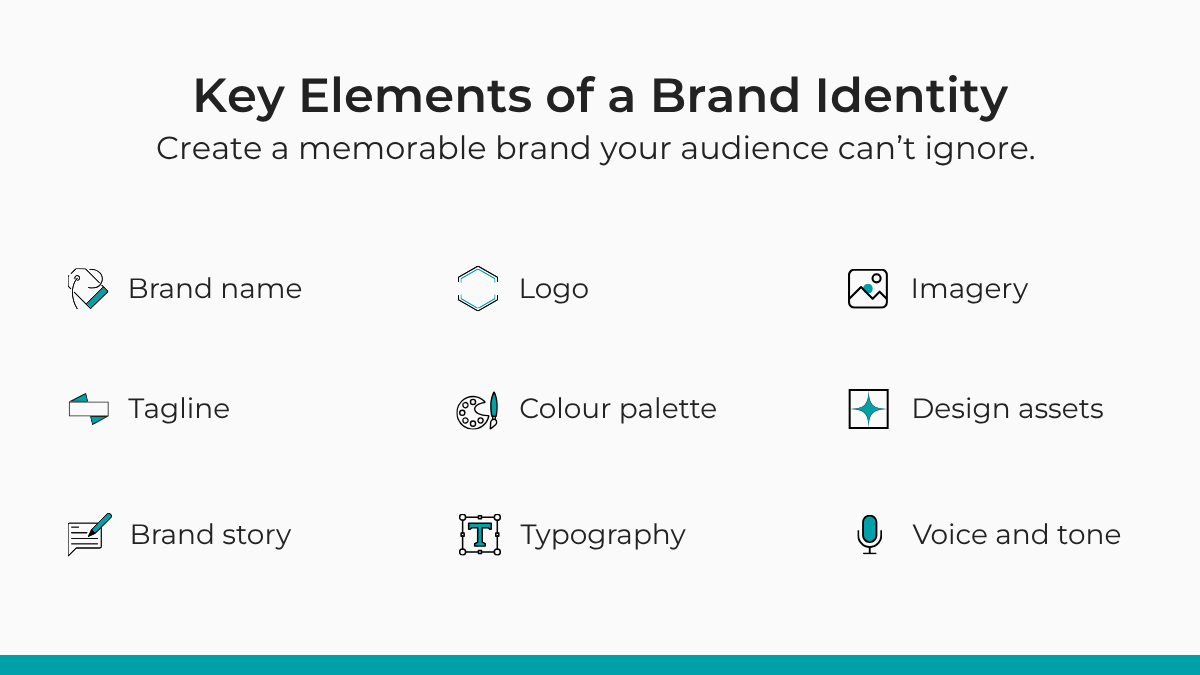
9 key elements of a brand identity
This topic deserves an entire article dedicated to it since opinions and processes may differ among brand designers.
It is common to see some brand designers categorise brand purpose, mission, personality, etc., as components of brand identity. Although there is some overlap, those are closely related to brand strategy and set the foundation for brand identity design.
Now that we’ve got that out of the way, let’s talk about the key elements of a brand identity. When you decide to brand (or rebrand) your business, don’t forget to add these branding elements to your toolkit.
• Brand name
The brand name is used to represent a business, product, or service. A good brand name should be distinctive, memorable, and easy to pronounce.
[Pro tip: If your brand name contains more than one word, see how it reads as one word to avoid an awkward moment when choosing a domain name. E.g. IT Scrap becomes “itscrap.com”, Choose Spain becomes “choosespain.com”.]
• Tagline
A short, catchy phrase associated with a brand’s purpose and mission. It’s different from a brand slogan. While a tagline is everlasting, companies use slogans to represent a specific marketing campaign.
• Brand story
A brand story narrates how your business came to be, why it matters, and to whom. A sticky story is relatable and makes it easy for your ideal customers to fall in love with your brand.
• Logo
A logo is a visual symbol that represents your brand and distinguishes you from your competition. It should be simple yet unique to stand out and be easily recognisable.
• Colour palette
Colours are known to evoke certain emotions and create connections. Applying the same colours consistently across various brand assets can help you create a cohesive visual identity.
• Typography
Typography involves selecting fonts and displaying text to add depth and personality to your brand’s visual communication. When choosing typography, ensure it is legible across all devices.
• Photography or imagery
Brand photography and imagery are crucial in establishing a strong visual presence for a business. It helps to communicate your brand personality and values, and connect with the right audience.
• Design assets
Design assets such as shapes, textures, and patterns can add intrigue and motion to your existing visual design system. You can use or reuse them across different digital and print materials.
• Voice and tone
Your voice and tone set the stage for your brand’s entire verbal communication. Voice is a consistent attribute, while tone changes depending on the content and context of a particular message.
Why brand identity matters
Did you know that half of Instagram users interact with brands at least once a day? That’s not all. People who recognise and recall a brand are more likely to continue interacting with your brand. That means your brand presence matters.
If that’s not enough reason to invest in an effective brand identity, here are a few more to convince you otherwise.
• Gain trust and confidence
People remember how you made them feel. When you sound robotic or inconsistent, you are giving them a reason to ignore you. Developing a brand identity can help you maintain a consistent presence that your audience can relate to and trust.
• Build customer loyalty
Pretending to be someone you’re not is a sure-fire way to lose customers. Yet, you see it so often with social media and AI. Your customers value and deserve to see the real you. An authentic brand identity that flaunts your personality can set you apart from others and build a loyal following.
• Stand out in the “sea of sameness”
Most business owners struggle with standing out in a saturated market where everyone looks and sounds the same. People form an initial opinion of your brand within 7 seconds. A well-designed brand can help you put your best foot forward and make an impactful first impression.
• Be consistent across the board
If your brand is all over the place, it reflects poorly on your brand and its reputation. It sends a signal to your audience that you’re chaotic and unreliable. Brand design sets you up for success with a clear system so you can finally stop reinventing the wheel every time you post.
The benefits of a clear brand identity outweigh the time, cost, and effort spent developing it. When executed properly, it can even give you a good return on your investment within a few months.
Do you need a brand identity for your business?
Now, moving on to the real question that solopreneurs and business owners are searching for: Do I need a brand identity for my business?
Some might say, “Everyone else has it”. But that’s hardly a good reason to part with your hard-earned money on a brand design. Meanwhile, others might convince you it is for the big brands.
Rather than relying on general advice, ask yourself these 7 questions to evaluate where you are right now and if you need one:
1. Do you have a clear brand strategy?
If your immediate reaction was “Brand strategy…Huh?”, you aren’t ready for a brand identity yet. First, you need to be clear on why you exist, what you offer, how you’re different, and how you want to come across. You could do it yourself or work with someone like me.
2. Are you launching, pivoting, or expanding your business?
Where your business is heading matters just as much as where it is now. If you’re new to the market, launching a new offer, pivoting, or planning to scale, what you started with might no longer be suitable. That means you should consider establishing a new brand identity or doing a rebrand.
3. Do you have unique brand assets that are easily recognisable?
Unique brand assets, such as logo, colour palette, and font pairings, that carry your distinct style can help you get noticed and remembered. People prefer to associate with brands they consider trustworthy. It is your responsibility to ensure your brand is dressed for it.
4. Did you design your own brand?
Canva and online logo makers are a popular choice among DIYers. They are easy, cheap, and time-saving. But if you use their pre-made templates or any stock content, your rights to the logo are non-exclusive. That means other people can use it for their brands without restriction.
5. Does your brand feel outdated or bland?
You might be wondering why you’re falling behind while your competitors seem to be moving up. Before you jump the gun, analyse whether it’s a business or a branding problem. If your branding is outdated or lacks personality, you might need a brand makeover.
6. Is your brand cohesive and consistent across all platforms and posts?
Evaluate all the main customer touchpoints (social media, website, storefront, etc.). You might use different colours or fonts for every social media post. Or it might sound like multiple people are managing the same account. If your branding is disorganised and scattered, you need a brand identity.
7. Do you have a sufficient budget?
As a general rule, don’t spend what you don’t have. That is not a good business strategy. But if your business is unable to grow because of branding issues, investing in a brand identity might be a wise choice. I’ll let you judge if it’s a sensible trade-off.
Unfortunately, there’s no one-size-fits-all answer. But depending on your current challenges, a well-designed brand identity can support your goals.
How to build a strong brand identity
Establishing a successful brand identity might seem easy. But don’t let it fool you. It does not start or end with creating a logo, colour scheme, or any other elements.
Brand identity is the outcome of a painstaking process of discovery, research, creativity, and consistency.
As the common saying goes, “Your input determines your output.” But the reverse applies too. Yes, you need to drill down on what really matters to build a brand identity that your audience will adore.
But you should also listen to what your ideal clients are saying after you launch. Because that is real-world feedback. And that feedback provides insight into how well your brand identity is working for or against you.
You might choose to do it yourself. Or you could hire a strategic brand designer like me. I use the DIVE framework to design modern, chic brands with a personality.
Key takeaway
Every business has a brand identity, whether intentional or not. The real question is: do you want to shape how your brand presents itself, or would you rather let the universe decide?
By defining your foundations and curating the key elements, you can build a consistent brand that resonates with your target audience.